
For a Los Angeles tour operator, the single most expensive thing in your business isn’t ads, insurance, or fuel — it’s the phone ringing while you’re on the water, on the trail, or mid-tour with a group. Studies of small businesses find that around 62% of inbound calls go unanswered, and in a city where 49.5 million visitors are deciding what to do next on their phones, an unanswered call is almost never a lost inquiry — it’s a booking the operator down the pier just took instead. A 24/7 AI receptionist closes that gap: it answers every call, qualifies the traveler, and books the trip while you’re busy being great at the actual tour.
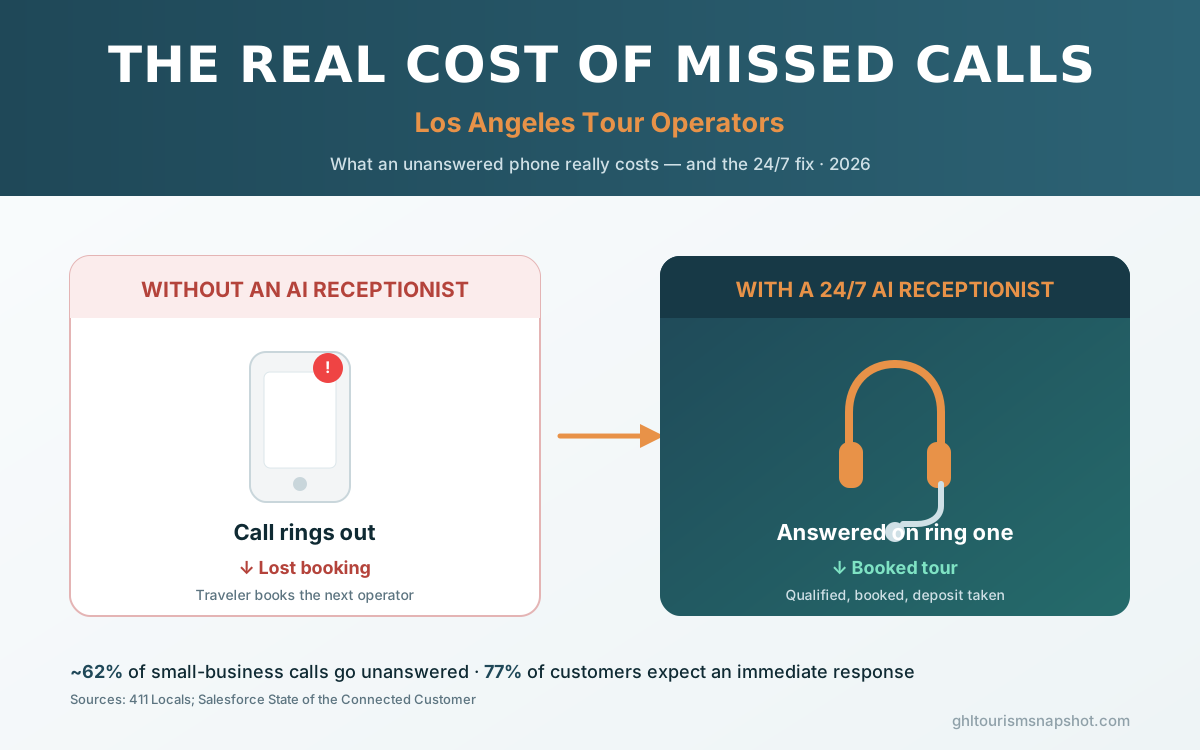
This is a straight look at what missed calls actually cost a tour and activity business in LA — with real, sourced numbers — and what to do about it without hiring a front desk or chaining yourself to your phone. It’s written for operators who’d rather be running trips than chasing voicemails, and for the agencies that serve them.
Why missed calls are the most expensive leak in an LA tour business
Tour operators lose bookings in quiet, invisible ways. A no-show here, a soft date that never firms up there. But the biggest leak is the one you literally can’t hear: the call that rings out while you’re leading a group. You never see it, so it never makes the list of problems to fix — and that’s exactly why it drains the most money.
Think about who’s calling. It’s a family that just landed at LAX and wants to book a Hollywood tour for tomorrow morning. It’s a couple deciding between your sunset sailing charter and two others, right now, standing on the Santa Monica Pier. It’s a group organizer with a credit card out, ready to book a food-truck crawl for eight. These are the highest-intent moments a traveler ever has — and a phone call is how ready-to-buy people reach out. When that call hits voicemail, most callers don’t leave a message and try again later. They tap “call” on the next result.
The cruel part is that this happens most during your busiest, best hours. The moment you’re fully booked and out running trips is the exact moment new travelers are calling to book the next one — and there’s no one at the desk, because the desk is you.
The data: how many calls actually go unanswered
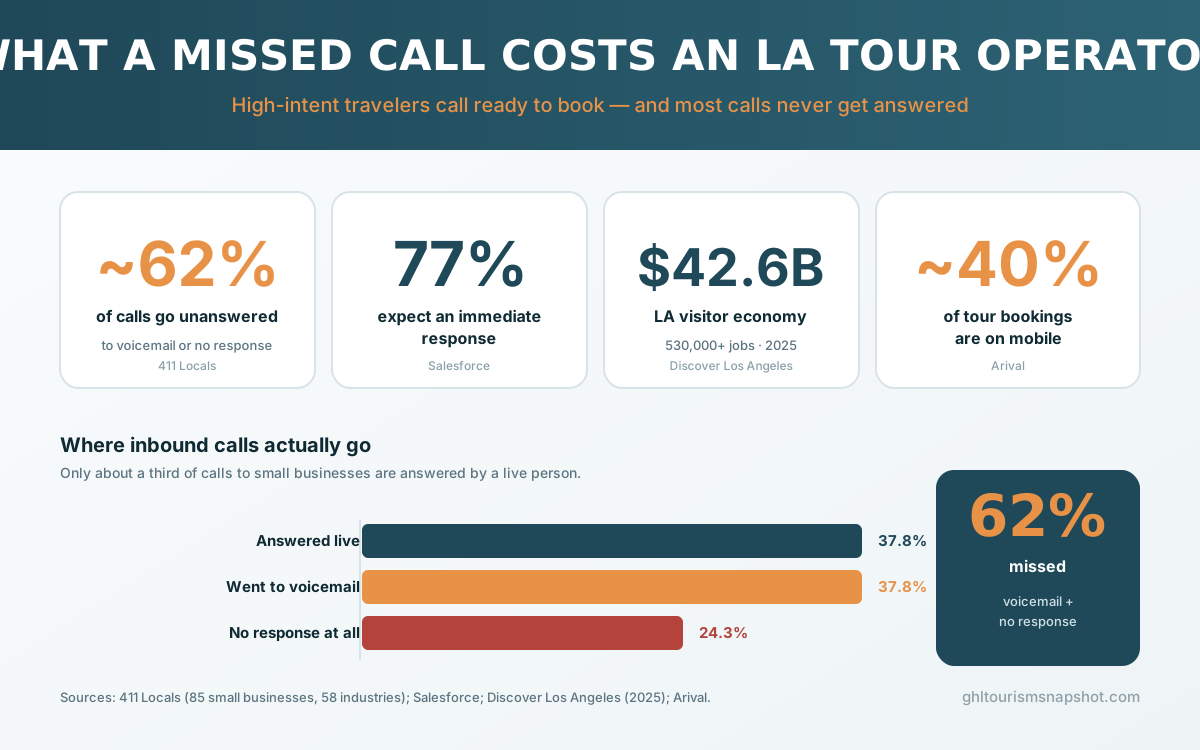
The most-cited study on this comes from 411 Locals, which monitored 85 small businesses across 58 industries over 30 days. The result is bracing: only 37.8% of inbound calls were answered by a live person. The remaining calls split into 37.8% that rang through to voicemail and 24.3% that got no response at all — no answer, no voicemail, nothing. Put together, roughly 62% of calls went unanswered (411 Locals).
Now layer traveler impatience on top. Salesforce’s research finds that 77% of customers expect to interact with someone immediately when they contact a company (Salesforce). “Immediately” doesn’t mean “I’ll wait for your callback after the tour.” It means now — and if not you, the next operator. Travelers aren’t unusually demanding; they’re normal modern buyers who expect an instant response and self-serve when they don’t get one.
In Los Angeles, a missed call is a booked competitor
Every market feels this, but Los Angeles turns the volume all the way up. Visitors to LA generated $42.6 billion in business sales and supported more than 530,000 jobs in 2025, on the back of roughly 49.5 million visitors to the region (Discover Los Angeles). That’s an enormous, constantly refreshing pool of travelers — most of them on their phones, most of them deciding what to do with limited time in a huge, spread-out city.
Two things about that demand make missed calls especially costly for LA operators. First, it’s mobile and last-minute: around 40% of tour and activity online bookings now happen on mobile (Arival), and a large share of experiences are booked within a few days of the activity — the traveler is already here, phone in hand, deciding tonight for tomorrow. Second, it’s densely competitive: for almost any experience — a Griffith Observatory tour, a Malibu wine day trip, a downtown mural walk — there are a dozen operators one search away. Low switching cost plus high intent means the traveler doesn’t wait; they just book whoever picks up.
So when your phone rings out in LA, you’re not losing an inquiry into some future follow-up funnel. You’re handing a ready buyer, with a card out, to the competitor whose phone was answered. The missed call isn’t neutral — it’s a direct transfer of revenue.
Speed to lead: whoever answers first wins the trip
There’s a whole body of research on how fast you have to respond, and it’s remarkably consistent: the first business to reach a ready buyer usually wins. The landmark Harvard Business Review audit of 2,241 U.S. companies found that firms contacting a lead within an hour were nearly 7× more likely to have a meaningful conversation with a decision-maker than those that waited even 60 minutes longer — yet the average firm took 42 hours to respond, and 23% never responded at all (Harvard Business Review).
An hour is already too slow for a traveler standing on a pier. The tighter research is starker: the widely cited Lead Response Management study found that contacting a web lead within 5 minutes made you about 21× more likely to qualify it than waiting just 30 minutes (via Drift). In travel, the window is even shorter, because the buyer is mid-decision with alternatives open in other tabs.
This is the front-end version of the speed-to-lead problem every operator should memorize: the fastest response wins, and the fastest possible response is the one that happens automatically, the instant the phone rings. You cannot out-hustle a system that answers in one ring — and neither can your competitor, if that system is yours.
Why a human front desk can’t close the gap
The obvious fix is “hire someone to answer the phone.” For most tour operators, that math doesn’t work — and even when it does, it doesn’t actually solve the problem.
A receptionist earns a median of $17.90 an hour in the U.S. (U.S. Bureau of Labor Statistics). One full-time hire covers roughly 40 hours a week — but travelers call evenings, weekends, and holidays, precisely when a single desk person has gone home. To genuinely cover the hours travelers actually call an LA operator, you’d need two or three people in a rotation, which is a five-figure-plus payroll commitment before a single tour is sold. And a human still can’t answer two calls at once during your Saturday-morning rush, still takes lunch, still calls in sick, and still can’t work while also selling tickets at the meeting point.
An answering service patches some of the after-hours gap, but the people answering don’t know your departures, can’t see your live availability, and can’t take a deposit — so the best case is a message you still have to call back, which puts you right back in the 42-hour-response trap. The gap isn’t a staffing problem you can hire your way out of. It’s a coverage-and-speed problem, and that’s precisely the shape of problem software solves better than people.
What an AI receptionist actually does for a tour operator
An AI receptionist — an AI Caller — is a 24/7 voice agent that picks up on the first ring, talks like a helpful team member, and does the specific jobs a great front desk would do for a tour business. It’s not a phone tree. It holds a natural conversation, understands what the traveler wants, and moves them toward a booked seat. (If you want the mechanics of how the voice technology works under the hood, we cover that in depth in AI voice agents for tour operators.)
Here’s what it handles, call after call, without you touching it:
- Answers every call instantly, 24/7. No ring-out, no voicemail, no “we’re currently on a tour.” The late-night planner and the Saturday-rush overflow both get a real answer.
- Qualifies the traveler. It asks the right questions — group size, date, which experience, any accessibility or language needs — so you’re not fielding tire-kickers between departures.
- Books the trip against live availability. It checks your calendar, offers real openings, and confirms the booking on the spot through your appointment automation — the same self-serve engine that powers 24/7 online booking.
- Takes a deposit and confirms. The traveler gets an instant confirmation, and a deposit is the single most effective no-show reducer there is — the backbone of any plan to cut tour no-shows.
- Follows up by text. It hands off to SMS automation for reminders and pre-trip details, so a booked traveler actually shows up — and it answers routine questions the same way your website chatbot does across channels.
- Never loses the record. Every call, booking, and deposit lands in your CRM, so nothing lives in a notebook or a voicemail box you’ll never check.
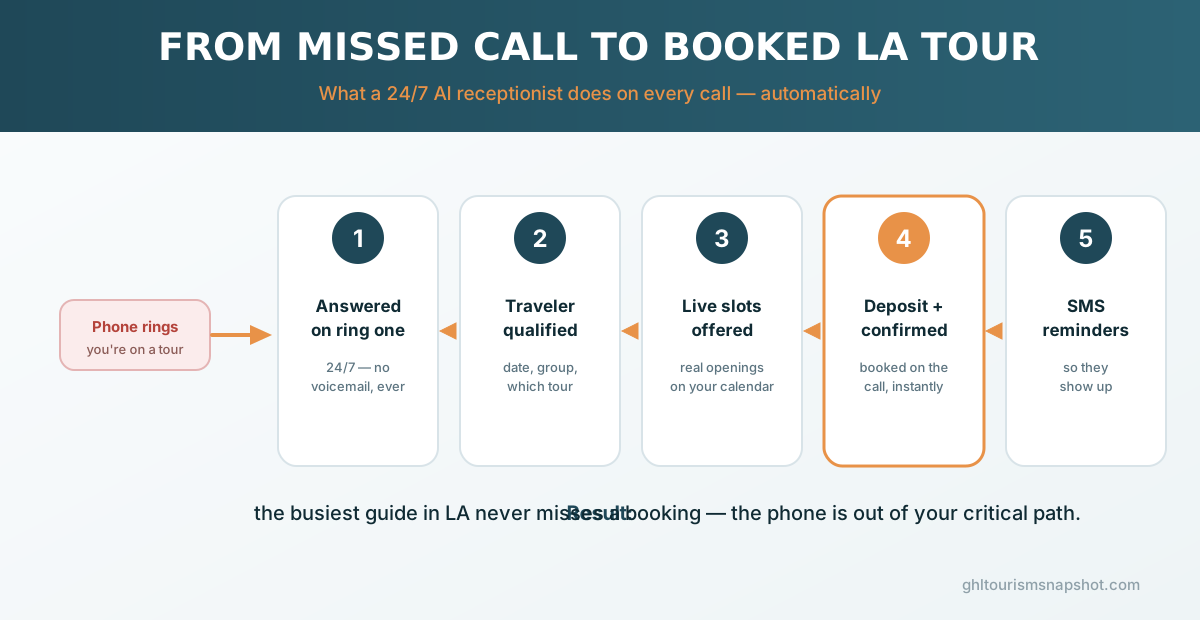
Notice what’s missing from that list: you. That’s the point. The AI receptionist doesn’t make you faster at answering the phone — it removes the phone from your critical path entirely, so the busiest guide in Los Angeles never misses a booking again.
Putting a dollar figure on your missed calls
You don’t need perfect numbers to feel this, but a rough model makes it concrete. Say your average booking is worth $85 a head, and a typical group booking runs $250. Now say a modest 8 calls a week currently go unanswered — after hours, during tours, or in the Saturday rush. That’s conservative for a busy LA operator in peak season.
If even half of those callers would have booked, and they average one to two travelers each, you’re losing on the order of $600–$900 a week in bookings you already earned the demand for — call it $30,000–$45,000 across a busy year. And that’s before the downstream loss: every one of those travelers who booked a competitor instead is a review, a referral, and a repeat trip that now belongs to someone else.
Set that against the cost of an always-on AI receptionist — a flat, predictable number with no payroll, no benefits, and no schedule — and it’s one of the rare investments that visibly pays for itself out of bookings you were already about to lose. As we always tell operators: fix the leak before you spend more on ads. Driving more traffic into a phone that goes unanswered just means paying to create demand you then hand to a competitor.
How to get an AI receptionist without becoming a GHL admin
Here’s the catch most operators hit: a real AI receptionist that answers, qualifies, checks live availability, books, takes a deposit, and texts a reminder isn’t one gadget — it’s a connected system. Wiring it up yourself means learning a platform you didn’t get into tourism to learn.
That’s the whole reason the Tourism Snapshot exists. The AI Caller is one of 11 done-for-you features in a complete GoHighLevel system — chatbot, SMS, review automation, booking, CRM, and a prebuilt website — pre-built for tour operators and installed into your GoHighLevel in about 24 hours, so you get the always-on receptionist without touching the wiring. If you’re starting fresh on GoHighLevel, you can also claim a snapshot discount through our partner link.
The fastest way to judge it is to hear it answer a call the way it would for your own tours.
Missing calls isn’t a discipline problem — it’s a physics problem. You can’t run a great tour and answer the phone in the same instant, and travelers won’t wait for you to finish. In a market as big, mobile, and competitive as Los Angeles, the operator whose phone is always answered wins the seat every time. The good news is that “always answered” is now something you can simply switch on — and let it work while you go do what you’re actually great at.
FAQ
How many calls do tour operators really miss?
Independent research on small businesses found only about 37.8% of inbound calls are answered by a live person, with roughly 62% going to voicemail or getting no response at all (411 Locals, 85 businesses across 58 industries). For a tour operator, the miss rate spikes during peak hours — exactly when you're out running tours and new travelers are calling to book the next one.
What is an AI receptionist for a tour business?
It's a 24/7 AI voice agent (an AI Caller) that answers every inbound call instantly, holds a natural conversation, qualifies the traveler, checks your live availability, books the trip, takes a deposit, and follows up by text — all without you picking up. It effectively gives a Los Angeles operator a tireless front desk that works nights, weekends, and during your busiest departures.
Why not just hire someone or use an answering service?
A receptionist earns a median of about $17.90/hour and covers roughly 40 hours a week, so covering evenings and weekends (when travelers actually call) takes two or three people. An answering service patches some hours but can't see your availability or take a deposit, so you still owe a callback — which lands you back in the slow-response trap. An AI receptionist covers 24/7 for one flat cost and books on the call.
Is missing calls really that expensive?
Yes, because callers are high-intent buyers and 77% of customers expect an immediate response. Miss the call and most don't leave a message — they book the next operator. Even a conservative estimate (8 missed calls a week, half of whom would have booked) puts the loss in the tens of thousands of dollars a year, before lost reviews, referrals, and repeat trips.
Do I have to learn GoHighLevel to run one?
No. The Tourism Snapshot installs the entire system — AI Caller, booking, deposits, SMS reminders, and the CRM behind them — into your GoHighLevel in about 24 hours, done for you. You can book a free demo to hear the AI receptionist handle a real call against your own departures before you decide.